






August 12, 2024


Recommended Blogs



ACI Base24-EPS is critical to preparing for the evolving digital payments landscape. Banks and FIs need an exceptional plan for the transition.
Regulatory compliance is a business mandate for financial industry participants. For instance, compliance with the global Payment Card Industry Data Security Standard, version 4.0 (PCI DSS 4.0) is crucial to protecting users’ sensitive information, during storage, processing, and transmission across the merchant and the payment enabler. ACI Worldwide’s Base24-eps can accelerate an FI’s efforts to maintain pace with the evolving standard. Staying competitive is paramount in the digital payments landscape where non-compliance is not an option.
The new PCI DSS V4.0 deadline is March 2025. According to The State of Enterprise Readiness for PCI DSS 4.0 Survey by S&P Global Market Intelligence, 90% of the respondents have apprehensions about meeting the compliance deadline.
Advantages of Base24-EPS for Financial Institutions
A payment engine needs switches, routing, authorization controls, security, and most importantly diverse points of contact to allow users to choose their preferred payment mode. ACI’s Base24-eps provides FIs with a robust set of features to enrich their customer’s experiences:
Comprehensive Support to Customer Transactions
Base24-eps’s architecture is flexible and adaptable. The architecture is developed considering the evolving nature of payments. The introduction of newer payment models and instruments in the form of credit, debit, and chip-based cards, mobile phones, wearables, etc. necessitates an extensible baseline for the continued evolution of payment solutions. It facilitates both retail and administrative transactions to offer unified reconciliation.
Flexible Routing Structures
Dynamic switching and payment routing choose the appropriate network, authorization mechanism, and processing formats to speed up the transaction. This is increasingly critical in the real-time payments space. Additionally, the option for users to set routing preferences offers greater control and facilitates minimizing currency exchange charges for cross-border transactions.
Robust Authorization
With the rise in cybercrime, multi-factor authorization is essential to add a layer of security to payments. The Base24-eps allows financial organizations to opt for varied transaction authorization mechanisms that may or may not use the data associated with the transaction. It accommodates large-scale and small-scale transactions and diverse transaction processing systems irrespective of the origin or destination of the money transfer.
Data Integration
Consumer data is spread across diverse systems, including core banking, fraud prevention, KYC management, authorization, and payments. Leveraging consumer data from all sources can help FIs the risk associated with each payment better. Additionally, FIs can use consolidated data to gather deep insights into user behavior. This is instrumental in driving product decisions and improving customer relationships.
Reinforced Security
Financial transaction security is one of the primary concerns for a payment enabler. Base24-eps provisions for an integrated security system with software, hardware, and procedural components to ensure well-rounded protection.
Superior Operability
The ACI Base24-eps is developed with high availability at the fore. The high volume and 24/7 operational availability make it apt for the instant anytime anywhere payments model. Consistent processing costs and resilient hardware minimize operational overheads for financial organizations. Above all, flexible journal configurations, 24/7 cutover processing, and downtime-less business logic extension allow for continued operations during maintenance and expansion initiatives.
Customizability and Ease of Use
Base24-eps offers superior control with configurable customizations. It provides customizable reporting and transaction data extraction mechanisms for financial institutions. The standard includes off-the-shelf support for globally renowned cards, such as American Express, Visa, and Mastercard. Most importantly, ACI Base24-eps is platform-independent making it suitable for any technology environment built for banking and financial services.
Base Lining Migration Needs
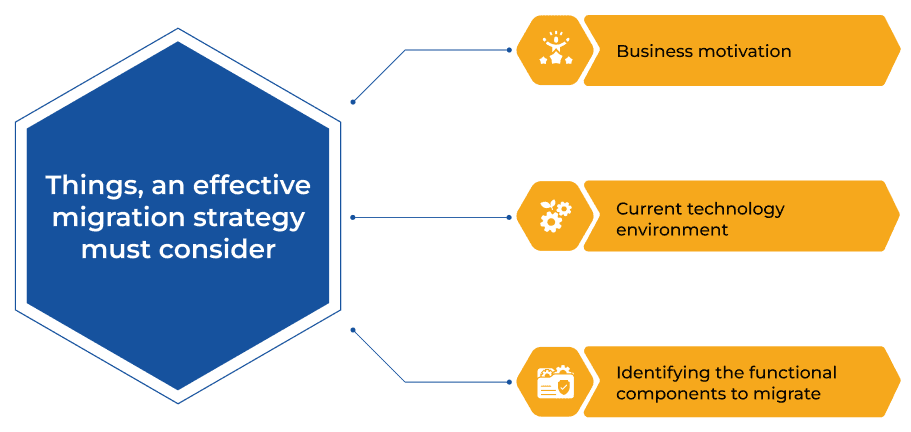
With the kind of business impact, it has and the necessity for compliance, ACI Base24 Classic to Base24-eps migration strategy must be carefully designed.
Challenges in Migration
While migration is imperative for financial institutions, certain factors may contribute to the increased complexity of the transition. These must be considered while developing the migration strategy.
- Whether the FI supports both issuing and acquiring services
- The countries supported amplify the compliance complexity
- The types of interfaces supported add to the processing complexity
- The level of coupling and quality of the existing system directly impact migration complications.
Migration Strategy Principles
While compliance necessitates migration, commercial, logistic, and technical constraints significantly impact the migration plan. However, certain principles help ensure the efficacy of the migration plan:
31% of professionals surveyed for the payments data security standard acknowledged that they did not have a comprehensive understanding of PCI DSS 4.0 requirements. That is when there is zero scope for non-compliance in the payments industry.
- Maintain the attributes of the existing system to prevent it from breaking down. It is a good idea to operate on a “hybrid whole” for a while, rather than doing away with the legacy system. This allows you to maintain backward compatibility.
- Ensure migration transparency for cardholders, merchants, third parties, collaborative partners, etc.
- It is the key to realize new benefits to the business as soon as possible. This improves the ROI and can serve as an important KPI for the migration.
- Intermediate transitions and temporary fallbacks add to the cost and effort of migration without benefitting the overall transition. Depending on the existing architecture, these might be necessary. However, minimizing these temporary throwaway investments is critical to elevating potential gains.
- Choose the migration technique carefully. Ensuring low downtime is critical to prevent affecting the user experience. Choosing between a phased transition and an instant switch-over requires technical expertise. While instant switchovers are quick and low-cost, phased migration has more room for error and rectification. However, factors such as existing features, added features, and the gap between legacy and the latest technology stacks, contribute to these decisions.
Partner with the Experts
Base24-eps not only shortens the time required to introduce new products and services, but also creates a separation between internal, and external business logic. This modularity facilitates technology management. All you need is a great migration strategy. With nearly three decades of experience in the money movement space, Opus is one of the most trusted technology providers in the industry. You gain a competitive edge by partnering with a team that understands the existing end emerging technology, compliance, and consumer trends. Speak to the team now to develop and execute an exceptional migration plan.
About us
Opus is a trusted engineering partner to payment providers, banks and fintechs navigating change in a real-time, digital-first world.
Our promise is simple: Business Value Acceleration. Realization. Maximization.
We deliver on this promise through the Opus trifecta-a domain-native engineering skillset, a value-creation mindset, and an Al augmented toolset that drives business agility.
From MVP (Minimum Viable Product) to MPT (Maximum Possible Transformation), Opus turns engineering into business advantage.